Description
NAD+ (Nicotinamide Adenine Dinucleotide)
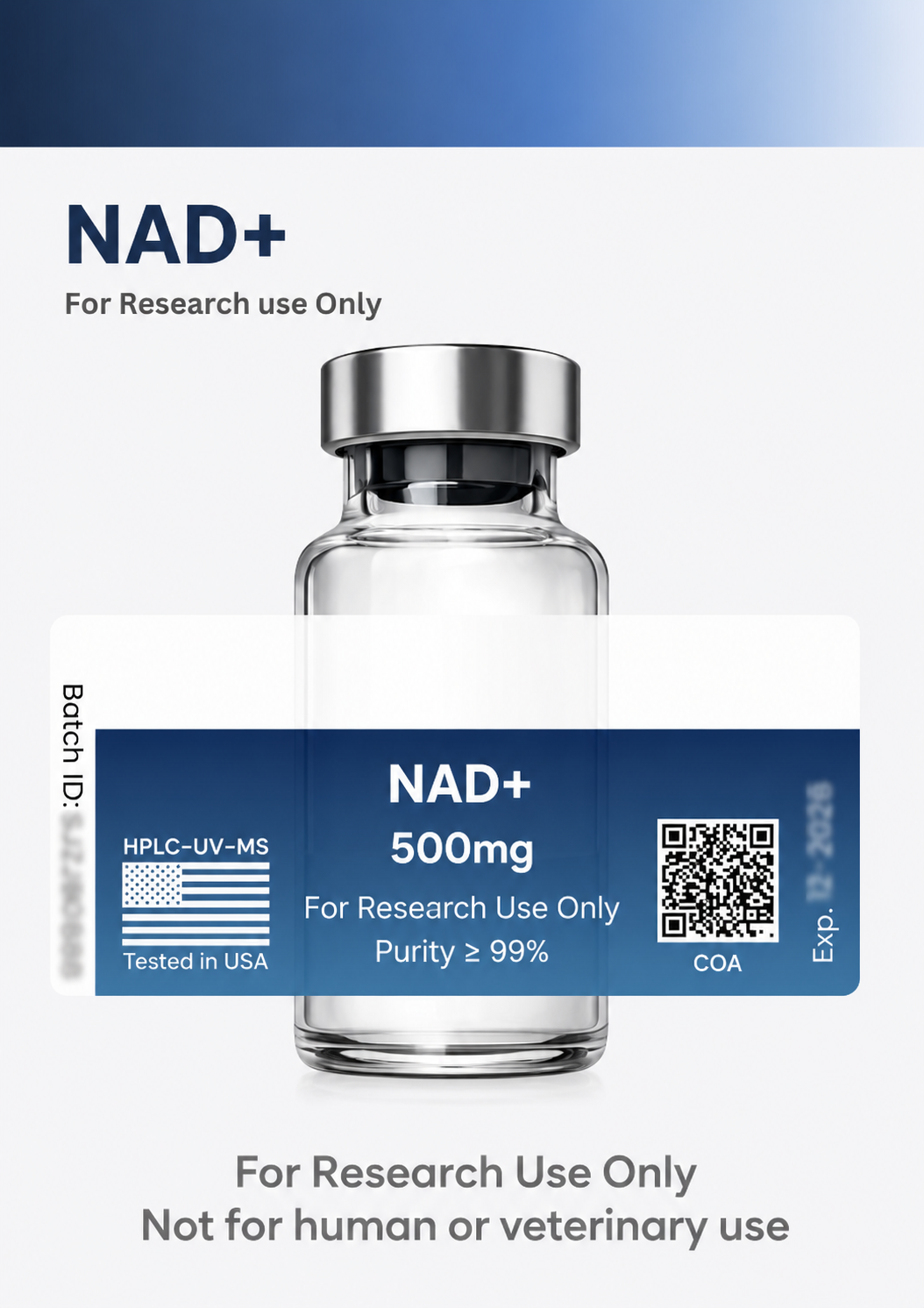
NAD+ Research Compound (Nicotinamide Adenine Dinucleotide), is a naturally occurring dinucleotide coenzyme involved in fundamental biochemical processes.
In laboratory research, NAD+ is commonly investigated in connection with oxidation-reduction reactions, electron transfer, enzyme activity, metabolic pathways and NAD+-dependent biochemical systems.
LV Longevity Peptides provides NAD+ as a research-use material for controlled laboratory and analytical applications.
What Is NAD+ Research Compound?
NAD+ is the oxidized form of nicotinamide adenine dinucleotide, a small-molecule coenzyme found throughout biological systems.
Unlike peptides such as BPC-157 or TB-500, NAD+ is not a peptide. It is a dinucleotide composed of nucleotide-derived components connected through phosphate groups.
This distinction is important when evaluating NAD+ research materials.
NAD+ is particularly relevant to research involving:
- redox chemistry
- electron-transfer mechanisms
- enzyme-dependent reactions
- metabolic pathway models
- biochemical signaling
- cellular energy-related research
- analytical characterization
NAD+ Chemical Information
| Property | Information |
|---|---|
| Product Name | NAD+ |
| Full Name | Nicotinamide Adenine Dinucleotide |
| Chemical Class | Dinucleotide coenzyme |
| Oxidation State | Oxidized form |
| CAS Number | 53-84-9 |
| Molecular Formula | Verify against your batch/COA |
| Molecular Weight | Approximately 663–664 g/mol depending on chemical form/reporting |
| Peptide? | No |
NAD+ Research Applications
NAD+ is relevant to several areas of controlled laboratory research.
Redox and Electron-Transfer Research
NAD+ participates in oxidation-reduction chemistry and can be studied in experimental systems involving electron-transfer mechanisms.
Enzyme Research
Researchers can investigate NAD+-dependent enzymatic reactions and biochemical pathways under defined laboratory conditions.
Metabolic Research
NAD+ is commonly examined in research involving metabolic pathway models and biochemical cofactor systems.
Mitochondrial-Associated Research
NAD+-related biochemical processes are frequently investigated in experimental models involving mitochondrial-associated pathways.
Analytical Research
NAD+ can also be evaluated through analytical techniques used to investigate:
- identity
- concentration/content
- chemical characteristics
- stability
- degradation
- chromatographic behavior
NAD+ and Cellular Energy Research
NAD+ is frequently discussed within biochemical research because of its role as a coenzyme in oxidation-reduction reactions.
In a controlled research setting, investigators can examine NAD+-dependent biochemical reactions and their relationship to metabolic systems.
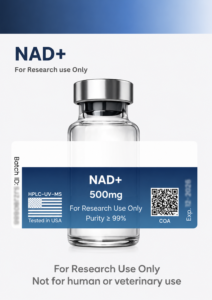
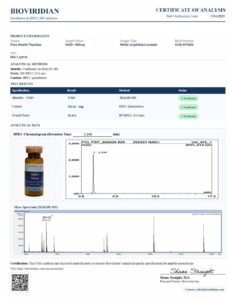
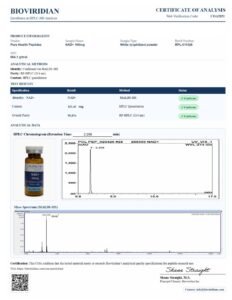
NAD+ Product Specifications
| Specification | LV Product Data |
|---|---|
| Product Name | NAD+ |
| Chemical Name | Nicotinamide Adenine Dinucleotide |
| CAS | 53-84-9 |
| Form | [YOUR ACTUAL FORM] |
| Quantity | [YOUR ACTUAL QUANTITY] |
| Concentration | [IF APPLICABLE] |
| Molecular Formula | [FROM COA/SUPPLIER] |
| Molecular Weight | [FROM COA/SUPPLIER] |
| Appearance | [ACTUAL SPECIFICATION] |
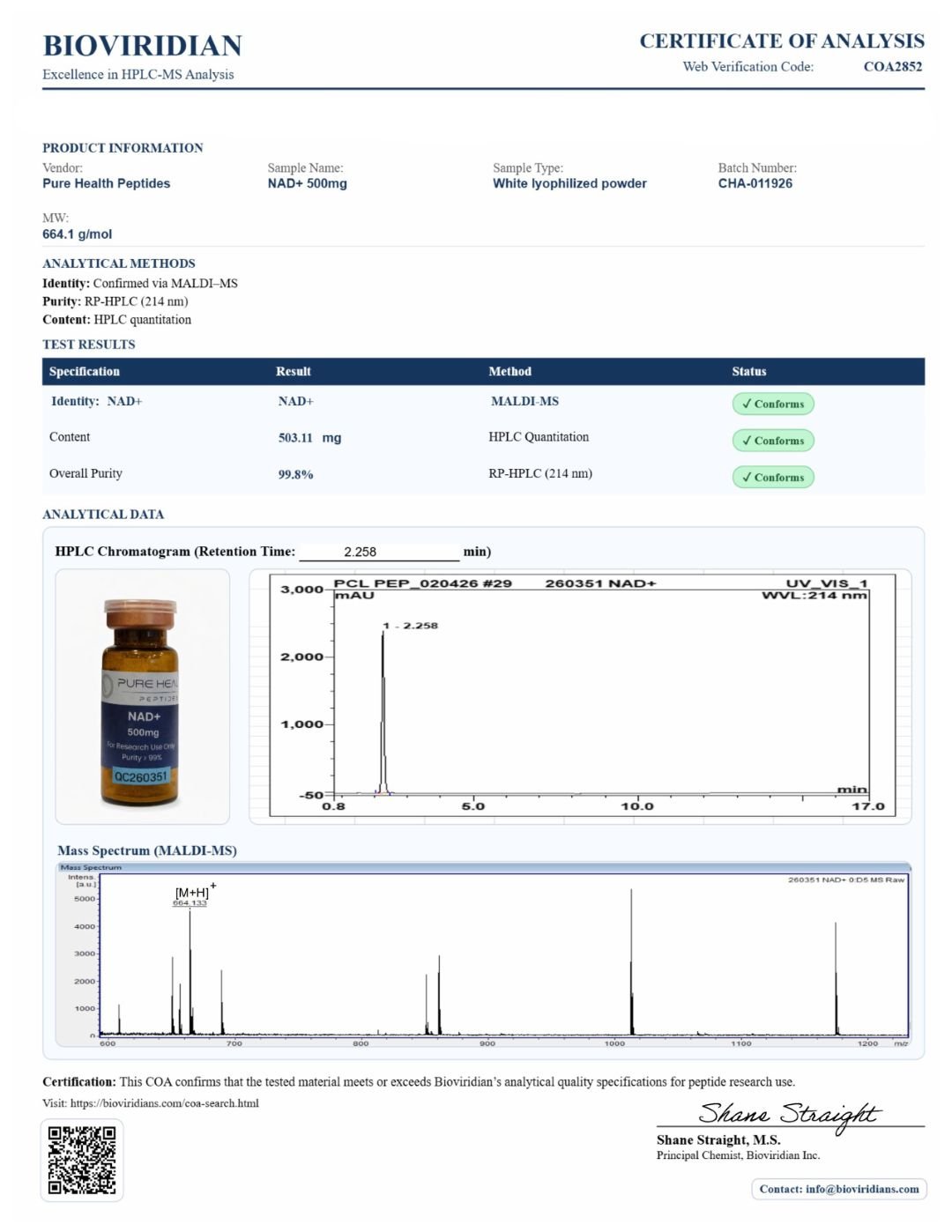
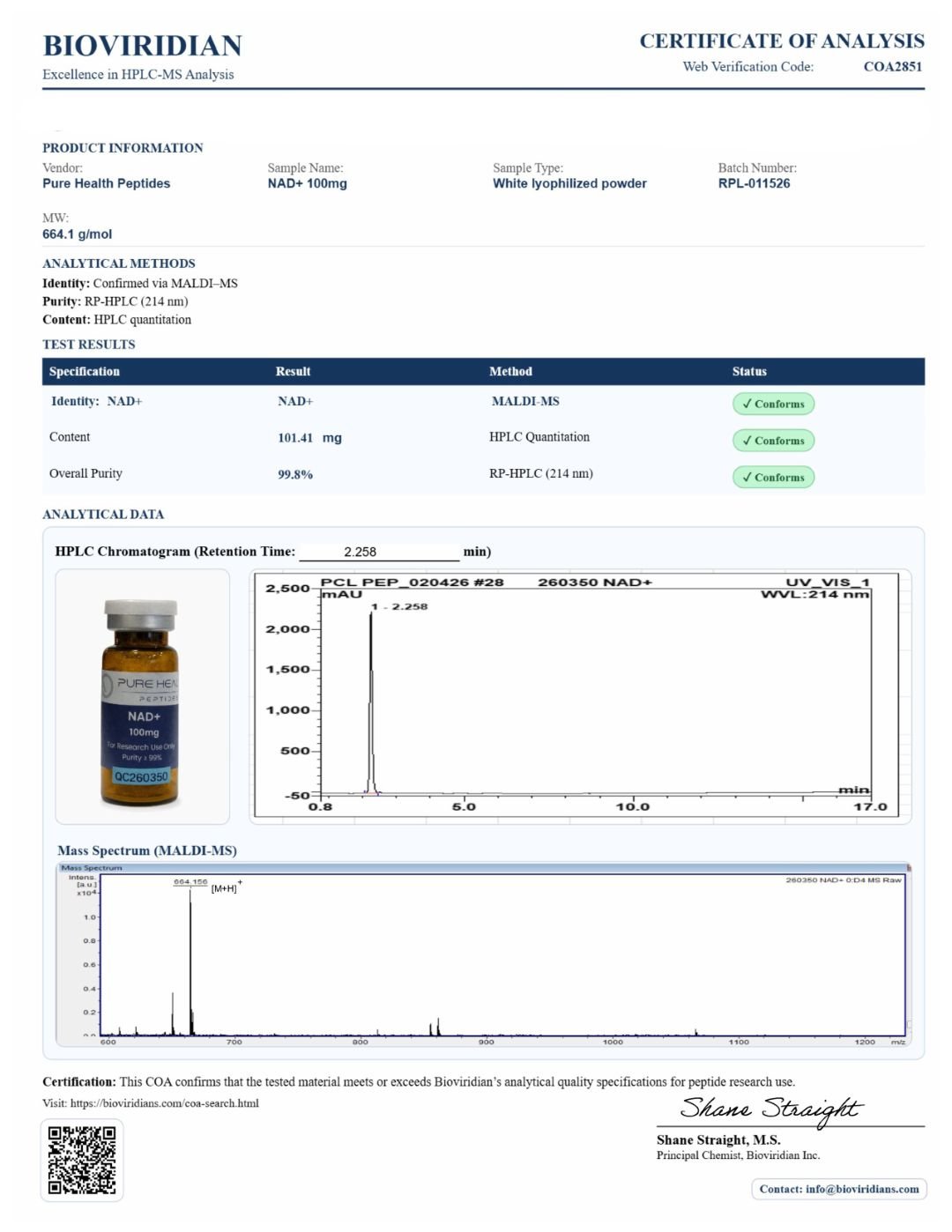
| Assay/Purity | [DOCUMENTED RESULT] |
| Analytical Method | [HPLC / LC-MS / OTHER] |
| Batch/Lot | [BATCH INFORMATION] |
Research Applications:
NAD+ is utilized in controlled research environments to support investigation of:
- Oxidation-reduction (redox) reactions and electron transfer mechanisms
- Coenzyme-dependent enzymatic activity in biochemical systems
- Mitochondrial-associated pathway modeling in in vitro research settings
- Intracellular signaling pathways involving NAD+-dependent processes
- Stability, degradation, and analytical profiling in assay-based systems
All research applications are conducted in non-human, non-clinical experimental settings.
Storage and Handling:
- Store lyophilized material at −20°C (−4°F)
- After reconstitution, store at 2–8°C (36–46°F) and use promptly
- Avoid repeated freeze-thaw cycles
- Maintain aseptic techniques during laboratory handling
Product Specifications:
- Purity: ≥99% (HPLC Certified)
- Appearance: Lyophilized white powder
- Solubility: Soluble in suitable laboratory agents
Chemical Information:
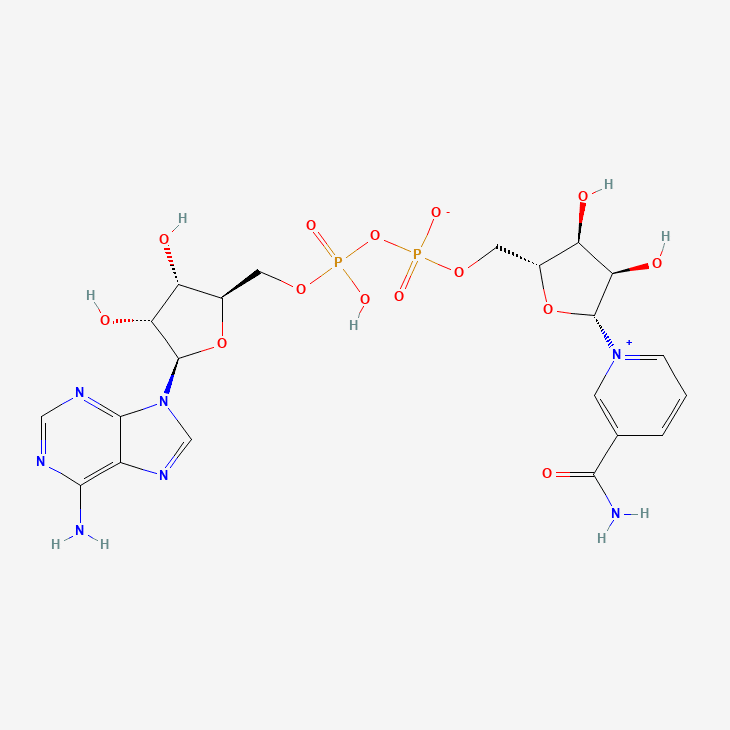
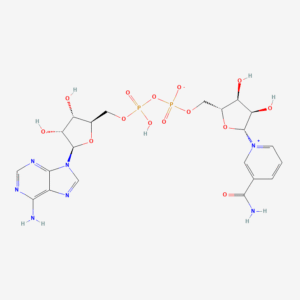
- Molecular Formula: C21H27N7O14P2
- Molecular Weight: 663.43 g/mol
- Sequence: N/A (NAD+ is a small molecule, not a peptide)
- Molecular Structure:
Reviews
There are no reviews yet.