Description
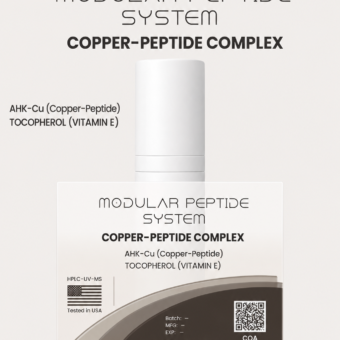
Modular Peptide System D – AHK-Cu Copper Peptide Research Complex
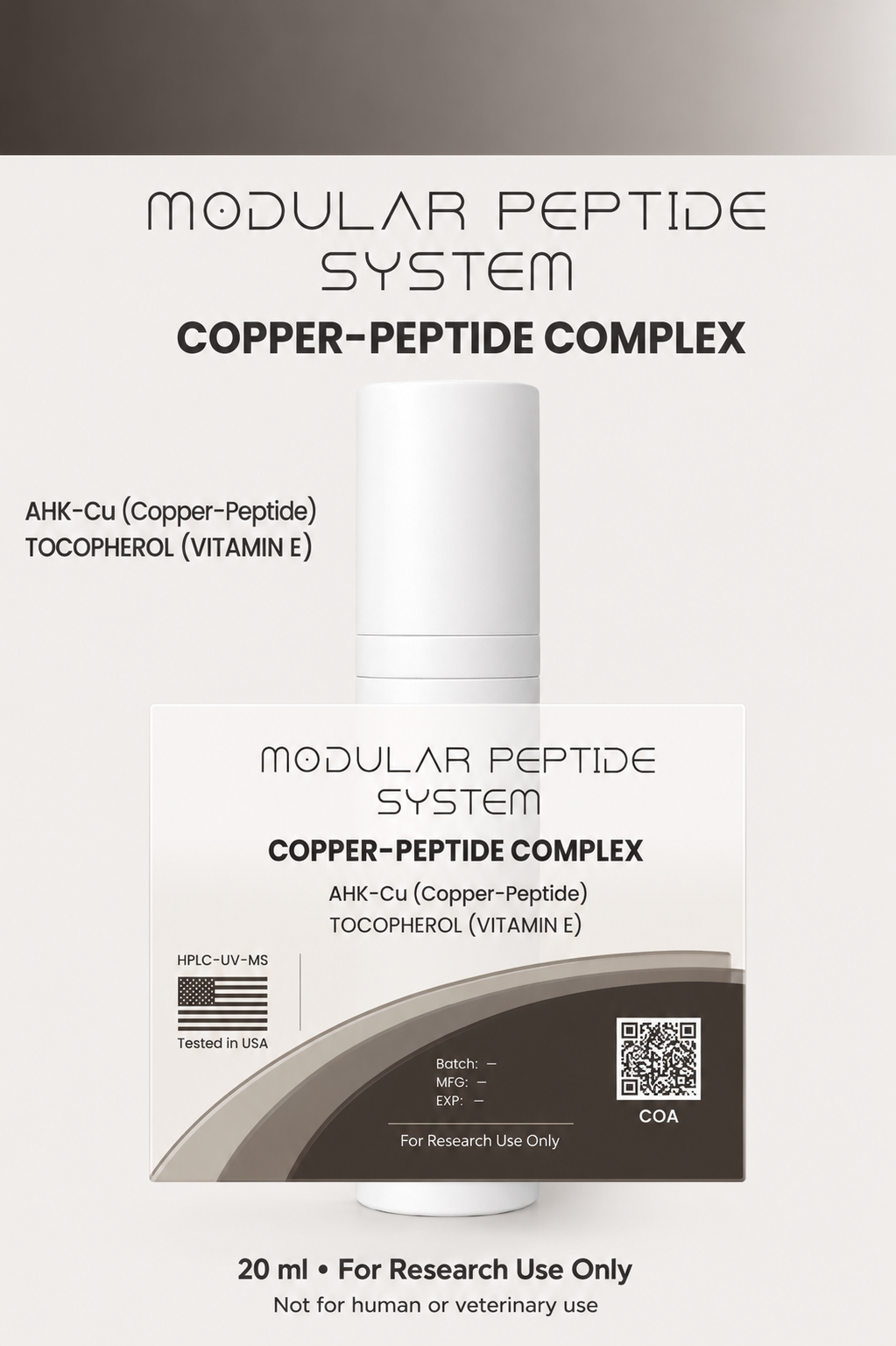
Modular Peptide System D is a specialized copper-peptide serum-emulsion centered on AHK-Cu.
AHK-Cu represents a copper-coordinated peptide system, making Module D chemically distinct from research formulations containing free, uncomplexed peptides.
The supplied formulation specifies:
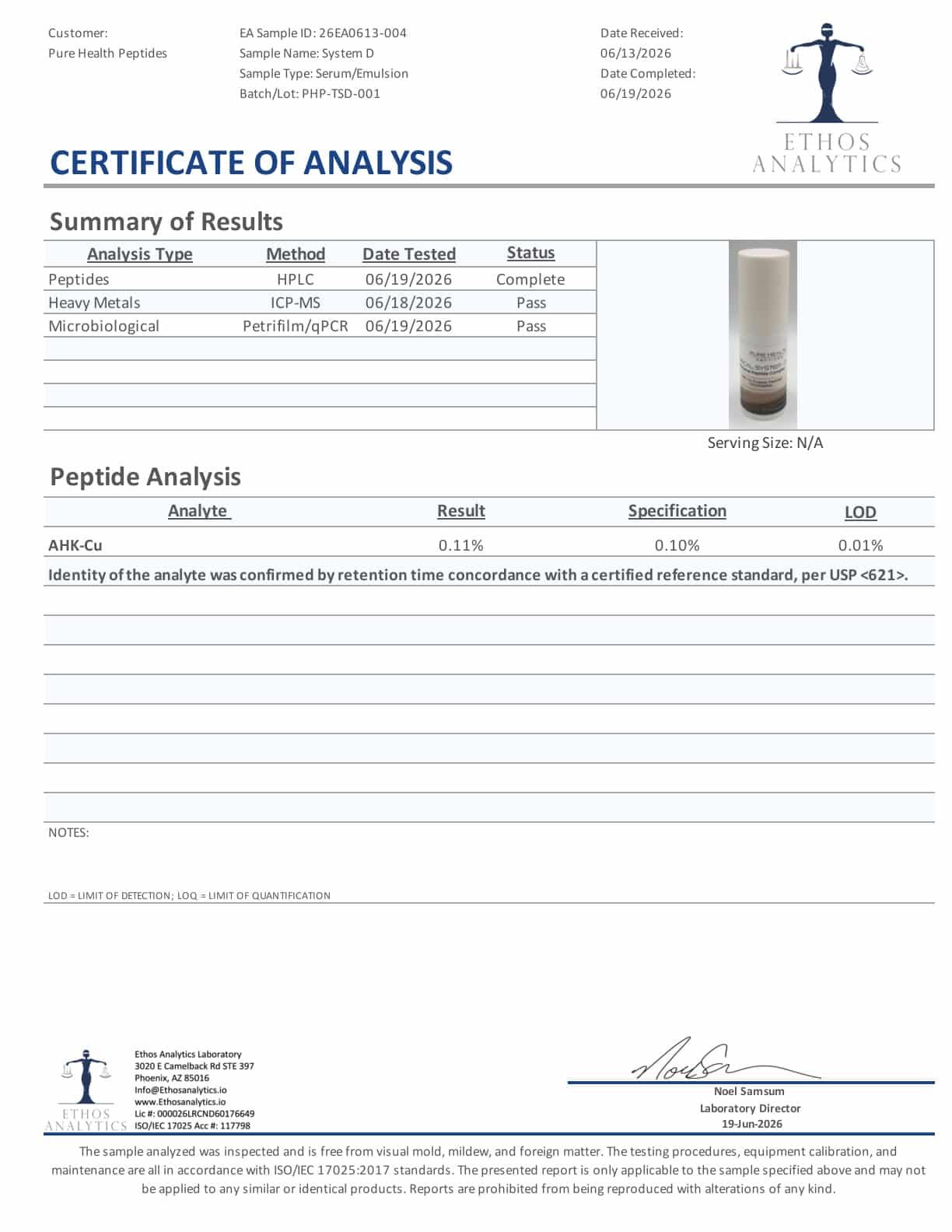
- AHK-Cu: 0.10%
- Tocopherol (Vitamin E): 0.20%
- Total peptide content: 0.10%
- Volume: 20 mL
- pH: 5.5–6.5
- Formulation: buffered serum-emulsion
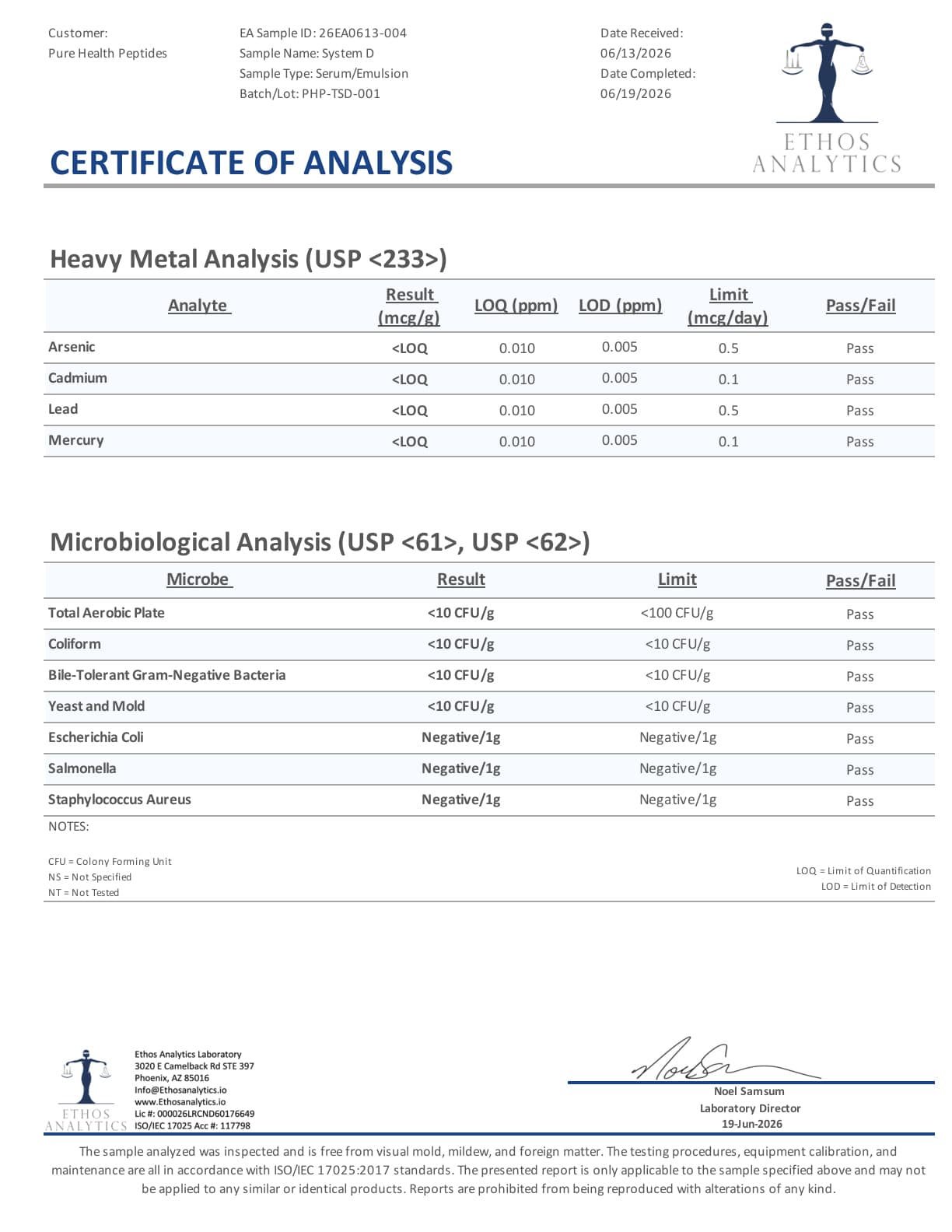
The product information also identifies HPLC-UV-MS as the analytical methodology and states that the formulation is subject to ISO/IEC 17025-accredited laboratory verification.
For LV, these specifications should be published only when confirmed against the actual LV formulation and current batch documentation.
What Is AHK-Cu?
AHK-Cu is a copper-associated peptide complex based on the short peptide sequence AHK.
The product documentation describes AHK-Cu as the copper coordination complex of N-acetyl-alanyl-histidyl-lysine. The acetylated peptide structure distinguishes it chemically from an unmodified AHK peptide.
This distinction is important for research documentation because AHK-Cu should not simply be described as an ordinary free peptide.
AHK-Cu Research Characteristics
The copper-associated structure provides a research system for examining:
- Peptide-metal coordination
- Copper-associated peptide chemistry
- Molecular composition
- Complex stability
- Analytical characterization
- Formulation compatibility
- Peptide integrity
- pH-dependent formulation behavior
Copper-Peptide Research Formulation
Module D is particularly relevant for research involving coordination-complex chemistry.
Unlike a conventional peptide solution containing a free peptide, the primary peptide component is associated with copper.
This creates additional analytical considerations, including:
- Metal coordination
- Complex identity
- Peptide integrity
- Analytical mass behavior
- pH-dependent stability
- Interaction with formulation components
- Oxidative and environmental stability
The supplied product documentation describes the formulation as incorporating a buffered serum-emulsion matrix, tocopherol, and a chelation system intended to support copper-peptide formulation stability.
For LV, any specific claims about formulation architecture should be retained only if they accurately describe the LV formulation.
Product Specifications
| Specification | Modular Peptide System D |
|---|---|
| Product Name | Modular Peptide System D |
| Product Type | Copper-peptide research formulation |
| Primary Peptide | AHK-Cu |
| Chemistry Class | Copper-coordinated peptide complex |
| Formulation Type | Serum-emulsion |
| Volume | 20 mL |
| AHK-Cu | 0.10% |
| Tocopherol (Vitamin E) | 0.20% |
| Total Peptide Content | 0.10% |
| pH Range | 5.5–6.5 |
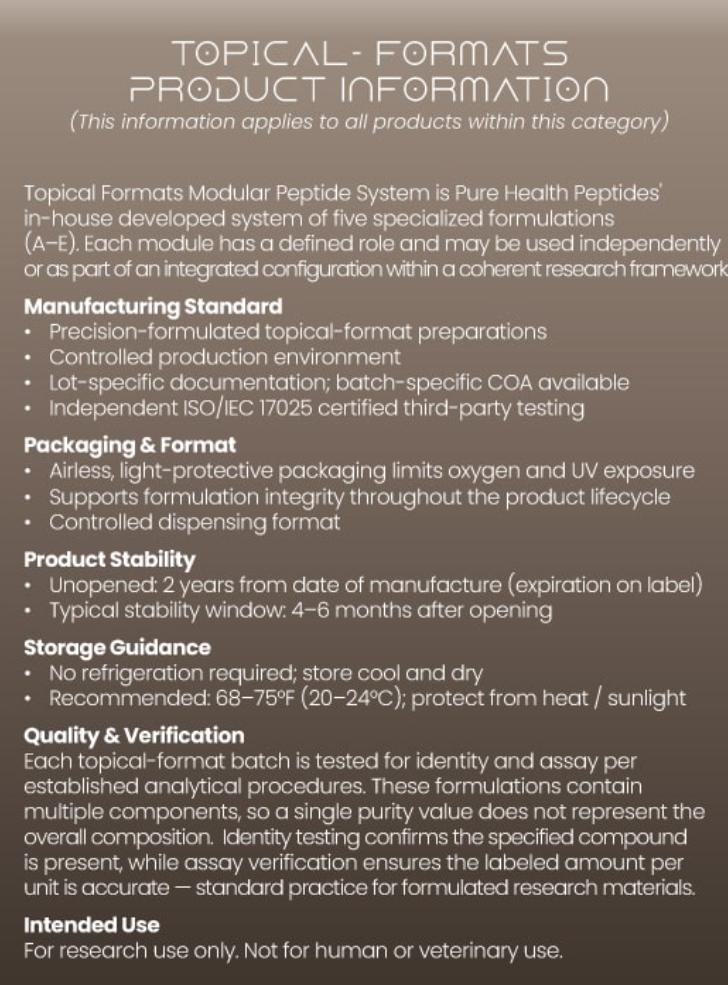
| Packaging | Opaque airless UV-protective container |
| Testing Methodology | HPLC-UV-MS |
| Analytical Verification | ISO/IEC 17025 laboratory |
Why Module D Is Different
Module D should be presented as a single-peptide-dominant copper-complex formulation, not as a generic multi-peptide blend.
Its defining characteristics are:
AHK-Cu as the Primary Peptide
The formulation contains 0.10% AHK-Cu, making the copper-peptide complex the central research component.
Copper Coordination
AHK-Cu introduces metal-coordination chemistry that is distinct from free peptide systems.
Serum-Emulsion Matrix
The peptide complex is incorporated into a buffered serum-emulsion rather than supplied simply as an isolated dry peptide.
Defined Formulation Architecture
The specified formulation also includes tocopherol and a controlled pH range.
Information:
- Formulation Type: Copper-Peptide Serum-Emulsion
- Volume: 20 mL
- pH Range: 5.5–6.5
- Packaging: Opaque Airless UV-Protective Container
- Testing Methodology: HPLC-UV-MS
- Analytical Verification: ISO/IEC 17025 Accredited Laboratory
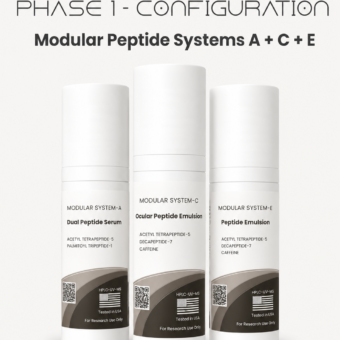
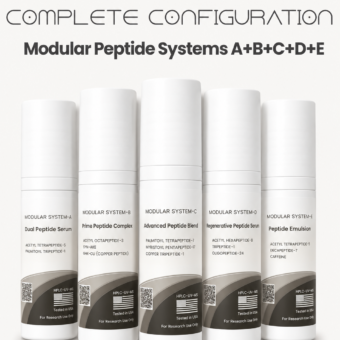
- System Compatibility: Phase 2, Complete Configuration, Standalone Evaluation
Analytical Composition:
- AHK-Cu: 0.10%
- Tocopherol (Vitamin E): 0.20%
- Total Peptide Content: 0.10%
Reviews
There are no reviews yet.