Description
Modular Peptide System E – Multi-Peptide Research Complex
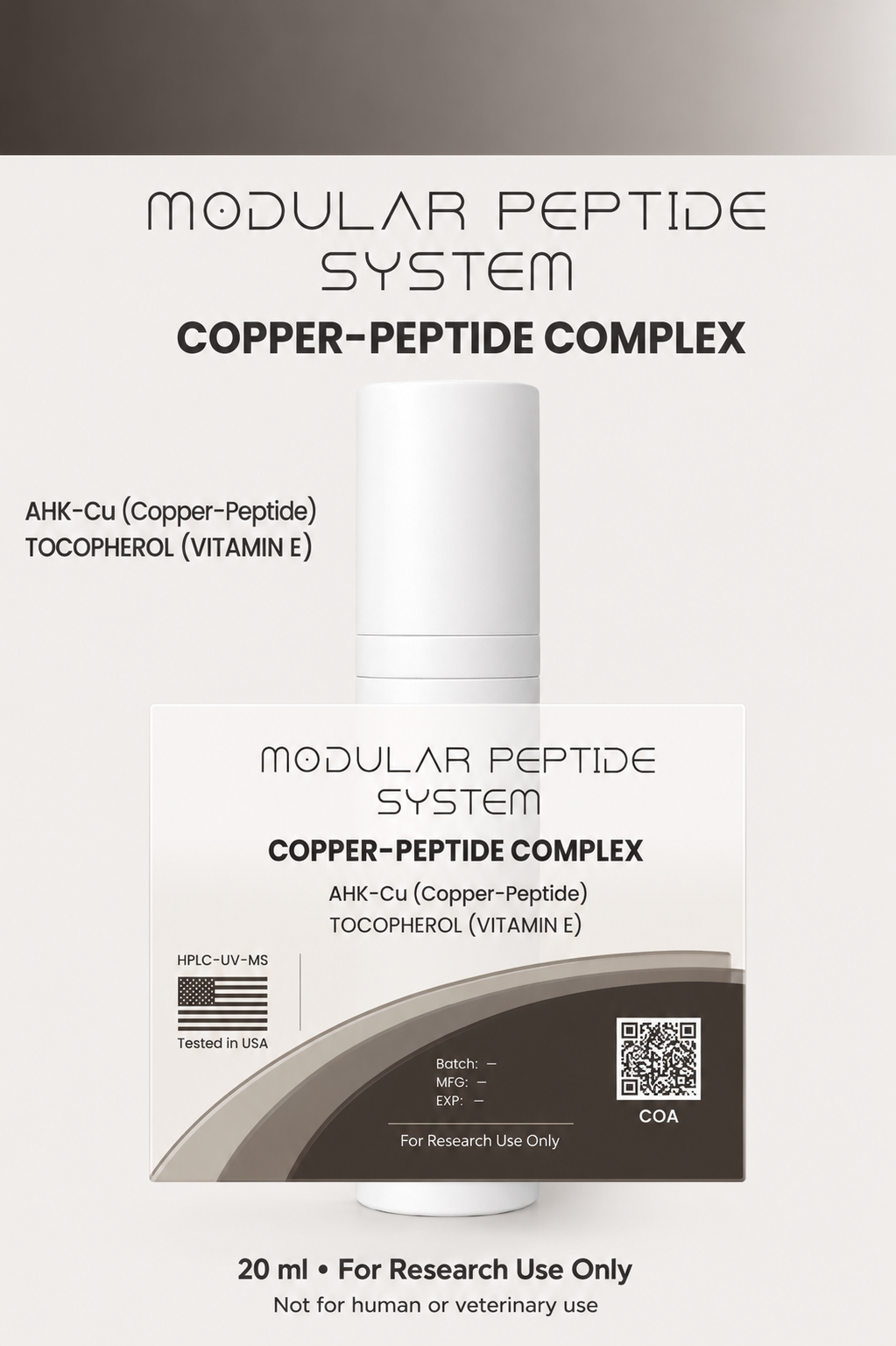
Modular Peptide System E is a defined three-peptide research formulation supplied as a serum-emulsion.
Unlike a single-peptide research material, Module E combines three distinct peptide architectures within one formulation:
- Acetyl Octapeptide-3 (SNAP-8)
- Tetrapeptide-21
- AHK-Cu, a copper-associated peptide complex
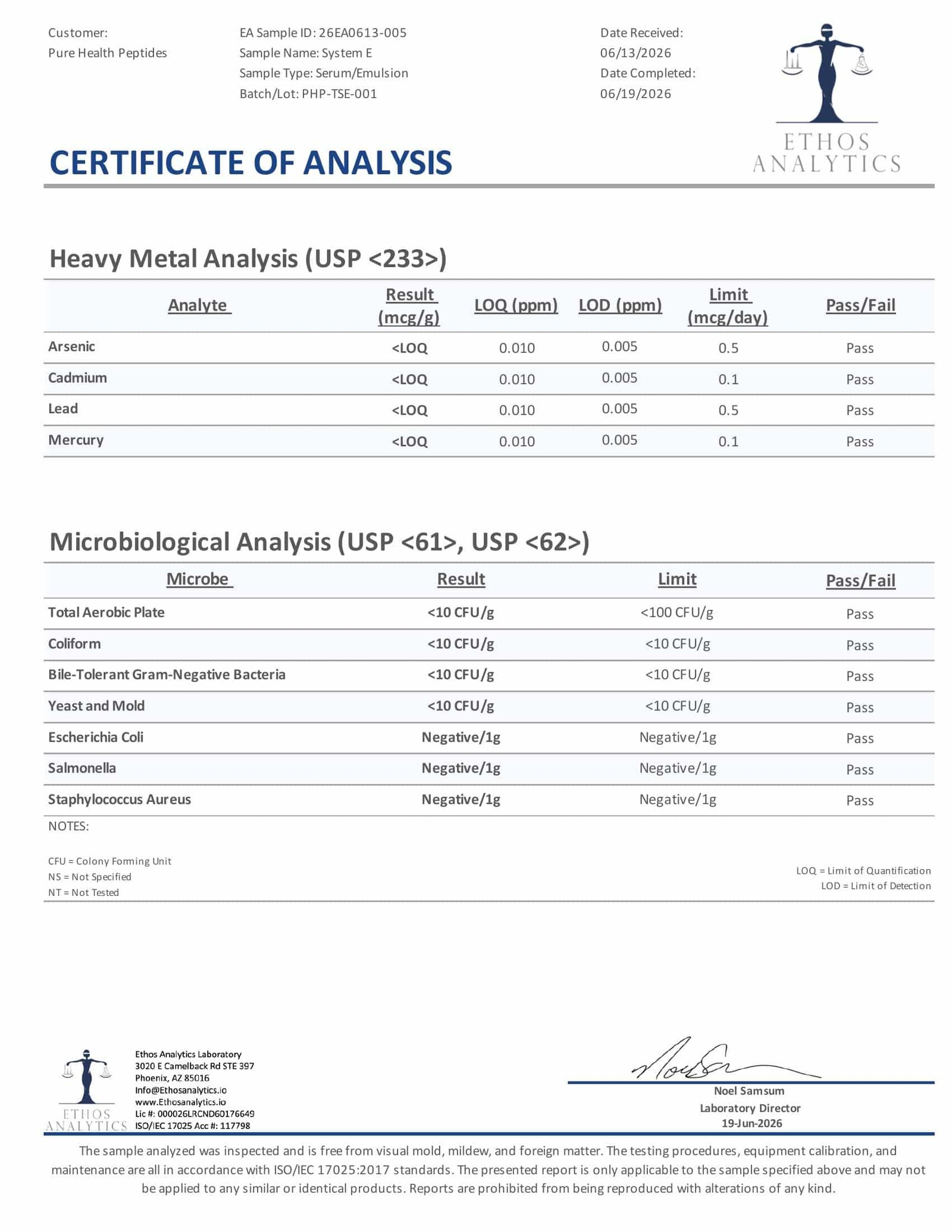
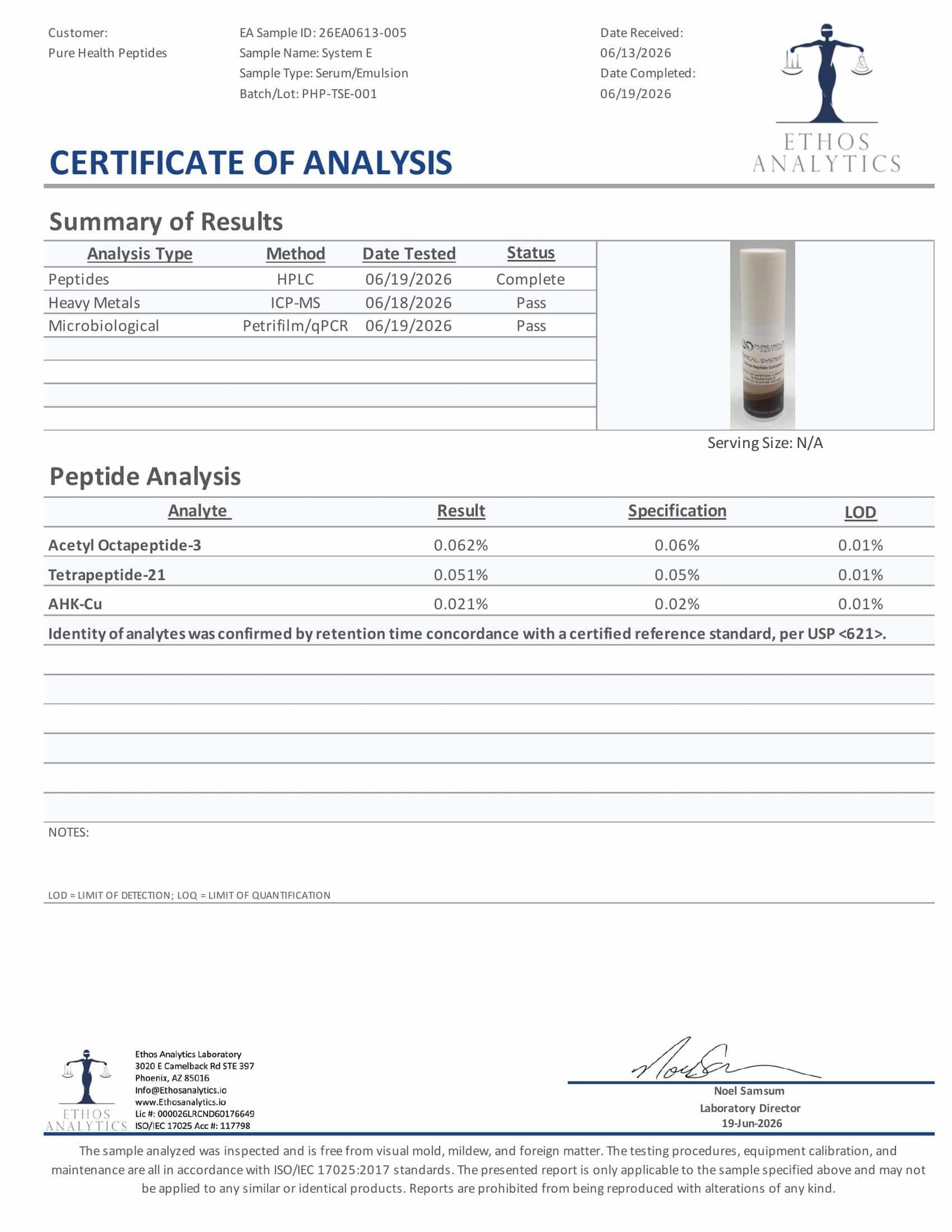
The supplied formulation specifies 0.06% Acetyl Octapeptide-3, 0.05% Tetrapeptide-21, and 0.02% AHK-Cu, giving a combined peptide content of 0.13%. The stated formulation volume is 30 mL and the pH range is 5.0–5.3.
The formulation can therefore be studied as a multi-component peptide system rather than as an individual peptide.
Multi-Peptide Composition
Acetyl Octapeptide-3 (SNAP-8)
Acetyl Octapeptide-3, commonly referred to as SNAP-8, is an acetylated short-chain peptide.
Formulation concentration: 0.06%
For the LV product page, the exact molecular formula, molecular weight, sequence, and analytical identity should be populated from the applicable LV technical documentation rather than copied from an unrelated batch.
Tetrapeptide-21
Tetrapeptide-21 is a four-amino-acid peptide component incorporated into the Module E formulation.
Formulation concentration: 0.05%
Again, the exact chemical identity and analytical specifications should be confirmed against the LV COA/SDS before publishing detailed molecular data.
AHK-Cu
AHK-Cu is a copper-associated peptide complex incorporating the AHK peptide sequence.
Formulation concentration: 0.02%
The copper-associated component makes Module E particularly interesting from an analytical perspective because it introduces a peptide–metal coordination system alongside the two non-copper peptide components.
The supplied product documentation specifically identifies AHK-Cu as one of the three structurally distinct peptide classes in Module E.
Why Module E Is a Multi-Peptide Research System
Module E contains three different peptide classes in one defined formulation.
This creates several useful research dimensions:
- Multi-peptide composition analysis
- Peptide compatibility studies
- Formulation stability research
- Peptide degradation monitoring
- Comparative analytical characterization
- HPLC analysis
- Mass-spectrometric characterization
- Peptide–metal complex analysis
- Serum-emulsion formulation studies
- Controlled pH-dependent research
- Multi-component formulation behavior
The page should focus on these analytical and formulation characteristics, rather than suggesting that the product produces particular effects in humans.
Formulation Characteristics
The supplied product specifications identify Module E as a multi-peptide serum-emulsion with a 30 mL volume and a pH range of 5.0–5.3. It is packaged in an opaque airless UV-protective container with low-oxygen headspace.
Recommended LV presentation
| Characteristic | Specification |
|---|---|
| Product Type | Multi-peptide research formulation |
| Formulation | Serum-emulsion |
| Volume | 30 mL* |
| Peptide Count | 3 |
| Total Peptide Content | 0.13%* |
| Acetyl Octapeptide-3 | 0.06%* |
| Tetrapeptide-21 | 0.05%* |
| AHK-Cu | 0.02%* |
| pH Range | 5.0–5.3* |
| Packaging | Opaque airless UV-protective container* |
| Headspace | Low oxygen* |
| Analytical Method | HPLC-UV-MS* |
| Use | Research use only |
Information:
- Formulation Type: Multi-Peptide Serum-Emulsion
- Volume: 30 mL
- pH Range: 5.0–5.3
- Packaging: Opaque Airless UV-Protective Container with Low-Oxygen Headspace
- Testing Methodology: HPLC-UV-MS
- Analytical Verification: ISO/IEC 17025 Accredited Laboratory
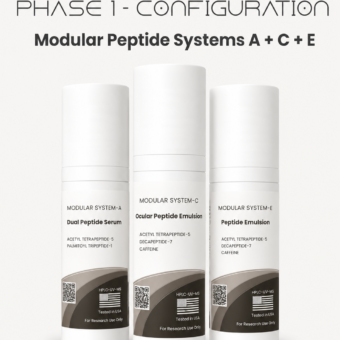
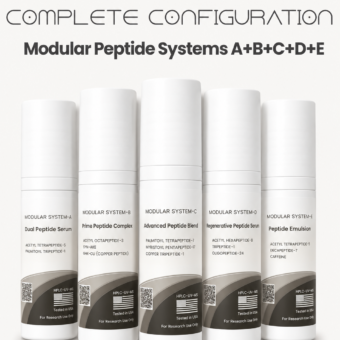
- System Compatibility: Phase 1, Complete Configuration, Standalone Evaluation
Analytical Composition:
- Acetyl Octapeptide-3 (SNAP-8): 0.06%
- Tetrapeptide-21: 0.05%
- AHK-Cu: 0.02%
- Total Peptide Content: 0.13%
Reviews
There are no reviews yet.